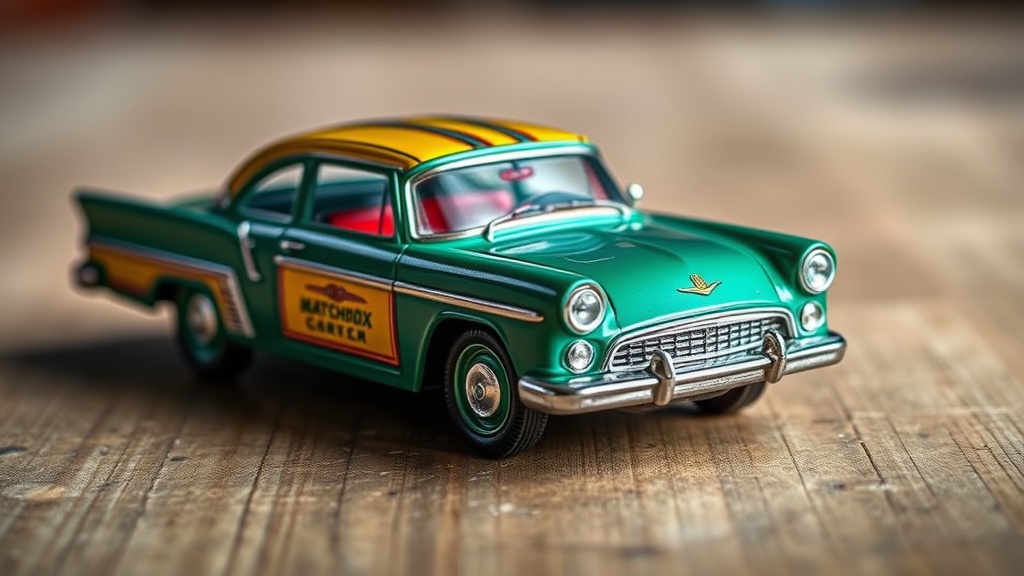
How to Clean and Restore Vintage Matchbox Cars Without Damage

This post covers practical, damage-free methods for cleaning and restoring vintage Matchbox cars—from gentle dusting to axle rust removal and paint touch-ups. Whether you've just inherited a shoebox of 1960s Lesneys or you've been hunting flea markets for years, knowing how to clean these die-cast treasures properly protects both their appearance and their resale value. One wrong solvent or overly aggressive scrub can strip original paint, blur tampos, or warp plastic windows forever.
What's the Safest Way to Clean a Vintage Matchbox Car?
The safest approach starts with the least invasive method and escalates only when necessary. That means dry cleaning first, then a mild soap bath, and only then moving to solvents or polishes.
Before touching any water or chemical, take a close look at the car. Check for loose parts, cracked windows, or flaking decals. If the base is held on with bent metal tabs (common on pre-1970 Lesney models), those tabs can snap if handled roughly. Take photos from every angle—this documents the "before" state and helps spot changes later.
Step 1: Dry removal. Use a soft makeup brush or a bulb blower (the kind sold for camera lenses) to lift dust from crevices. A wooden toothpick works well for packed grime in wheel wells or grille details. Don't use compressed air cans—the propellant can be too forceful and may blast off tiny parts like wing mirrors.
Step 2: Soap and water. Fill a bowl with warm water and a few drops of Dawn dish soap. Swish the car gently for thirty seconds, then use a soft toothbrush on tires and baseplate crevices. Rinse under lukewarm running water and pat dry immediately with a microfiber cloth. Here's the thing: soaking is risky. Water won't hurt the metal body, but it can seep into rivets and sit inside the base, leading to interior rust you can't see until it's too late.
Step 3: Deeper cleaning. For grease or sticker residue, Zippo lighter fluid (naphtha) applied with a cotton swab usually dissolves the gunk without harming paint. Test it on the base first. That said, never use acetone, brake cleaner, or modern all-purpose sprays—these will strip paint in seconds.
How Do You Remove Rust From Old Matchbox Wheels and Axles?
Surface rust on wheels and axles responds well to mechanical removal with fine abrasives, followed by a light protective coating.
Many vintage Matchbox cars—especially the "Superfast" era and earlier—have steel axles and wheels that oxidize over decades. The plastic tires usually survive, but the metal underneath can turn orange and rough. You don't need a workshop full of tools. A few targeted supplies and some patience go a long way.
Tools for Rust Removal
- 0000-grade steel wool — gentle enough for axles without scoring them deeply
- Mothers Mag & Aluminum Polish — restores shine to metal hubs
- Micro-Mesh sanding pads (up to 12,000 grit) — for smoothing pitted wheel surfaces
- WD-40 — displaces moisture after cleaning
- Precision tweezers — helpful for removing hair and fibers wrapped around axles
Start by pulling the wheels off the axle if possible. On many Lesney models, the axle ends are crimped; you can straighten the crimps with needle-nose pliers, slide the wheels off, then re-crimp later. If the axle won't budge, work around it. Wrap the plastic tire with masking tape to protect it from polish and abrasive dust.
Rotate the steel wool along the axle lightly. You're not trying to mirror-polish it—just removing flaky oxidation. For the wheel hubs, dab a pea-sized amount of Mothers Mag & Aluminum Polish onto a cotton cloth and rub in small circles. Wipe clean with a fresh cloth. The catch? If rust has eaten through the metal entirely, polishing won't save it. You'll need replacement wheels from a donor car or a parts seller.
After rust removal, spray a tiny amount of WD-40 onto a cloth and wipe the metal parts. This leaves a thin barrier against humidity. Don't overdo it—excess oil attracts dust.
Wheel Condition Comparison
| Condition | Appearance | Recommended Action |
|---|---|---|
| Light surface rust | Orange-brown haze, wheels still turn freely | Steel wool + polish, re-lubricate |
| Heavy pitting | Deep rough spots, axle stiffness | Micro-Mesh sanding, possible axle replacement |
| Structural damage | Broken wheels, bent axles, missing tires | Donor parts or reproduction wheels |
| Paint transfer | Scuffed paint from another toy on wheels | Naphtha on cotton swab, gentle rubbing |
Can You Restore Faded Paint on Matchbox Cars Without Repainting?
Yes—mild paint oxidation can often be revived with plastic polish or modeling wax, but severely faded or chipped paint usually requires careful touch-up or a full repaint.
Original paint on vintage Matchbox cars is enamel or lacquer, depending on the era. Over time, UV exposure and oxygen dull the finish. If the color is still there but looks chalky, Novus plastic polish (No. 2) applied with a soft cloth can bring back some gloss. Work in small sections, buffing by hand. It's not a miracle cure, but it improves the look of slightly tired paint without removing it.
For cars with clear coat remaining, Tamiya modeling wax adds depth and protection. Apply a thin layer, let it haze for five minutes, then buff off. Worth noting: this won't fill scratches or chips. It simply enforces what's already present.
When paint is actually missing—chips on corners, roof wear from play—touch-up becomes necessary. Many collectors use Testors enamel paint markers or fine brushes with acrylic model paints. The goal isn't to hide every flaw; it's to stop rust from spreading at bare metal spots and to improve visual consistency. Match the color as closely as possible by comparing to reference photos on sites like the Matchbox Collectors Forum or auction listings.
If a car needs full repainting, disassembly is usually required. Drill out the rivets carefully (a process called "drilling and tapping"), separate the body from the base, and strip old paint with a citrus-based stripper or brake fluid—yes, brake fluid works for stripping, but never for cleaning intact paint. After stripping, wash the metal thoroughly, prime with an automotive etching primer, spray thin coats of color, and finish with a matte or gloss clear coat depending on the original factory finish.
How Should You Handle Decals, Windows, and Plastic Parts?
Decals and windows are the most fragile parts of any vintage Matchbox car and should be treated with extreme caution—often, leaving them alone is the best preservation strategy.
Original decals (called "tampos" in the industry) are thin ink layers printed directly onto the metal. They don't sit under clear coat on most vintage models. Rubbing them with any solvent, even gently, can smudge or erase them entirely. If a decal is lifting at the edge, a tiny drop of white glue applied with a toothpick can secure it. Don't use superglue—it yellows and becomes brittle.
Plastic windows on 1960s and 1970s Matchbox cars are prone to two problems: scratching and "crazing" (fine internal cracks). You can't fix crazing. If the plastic looks cloudy with tiny spiderweb lines, replacement is the only real solution. Light scratches, however, can be improved with Novus No. 2 or a plastic headlight restoration compound. Apply with a cotton ball, not a cloth that might catch on rough edges.
Some collectors use a diluted solution of Future floor polish (now sold as Pledge FloorCare Multi-Surface Finish) to restore clarity to windows. Brush it on thinly and let it self-level. It's reversible and adds a protective layer without harsh chemicals.
What Supplies Belong in a Matchbox Restoration Kit?
A well-stocked restoration kit doesn't need to be expensive. A few reliable products and simple hand tools cover 90 percent of common cleaning and restoration tasks.
Here's a practical kit built from readily available items:
- Dawn dish soap — for initial washing
- Soft toothbrushes and makeup brushes — for scrubbing and dusting
- Zippo lighter fluid — for grease and sticker residue
- Novus plastic polish set (No. 1, 2, and 3) — for paint and windows
- Mothers Mag & Aluminum Polish — for metal hubs and axles
- 0000 steel wool — for light rust removal
- Micro-Mesh pads — for smoothing pitted metal
- Precision screwdrivers and pin drills — for disassembly
- Testors enamel markers — for chip touch-ups
- Cotton swabs, microfiber cloths, and toothpicks — for application and detail work
Store everything in a small plastic tote with a lid. Humidity is the enemy of metal collectibles, and keeping tools dry matters almost as much as keeping the cars dry.
How Do You Store Matchbox Cars After Restoration?
Proper storage locks in the results of your hard work and prevents the same damage from returning.
Once a car is clean, dry, and polished, give it a final inspection under good light. Check that windows are clear, axles spin freely, and no moisture remains in crevices. Let the car sit on a paper towel for at least twenty-four hours before sealing it away. This allows any trace solvents or oils to evaporate fully.
For long-term storage, individual crystal cases (the type made by Protecto Pak or similar manufacturers) are the standard among serious collectors. They keep dust off, prevent paint rub from contact with other toys, and allow easy stacking. Avoid PVC "soft" cases—the plasticizers can react with paint over time and cause sticky surfaces or color bleeding.
If you store cars in a drawer or cabinet, add a few silica gel packets to control humidity. Replace them every few months. Temperature swings aren't great for metal and plastic, so avoid attics, garages, and basements when possible. A closet in a climate-controlled room is ideal.
Finally, document what you've done. A simple spreadsheet with columns for model name, series number, condition before restoration, work performed, and date helps track provenance. If you ever sell or trade the car, buyers appreciate honesty about what has been cleaned, polished, or repainted. Transparency builds trust in the collector community—and it protects the history of these small but significant pieces of toy design.
Steps
- 1
Gather Soft Brushes, Cotton Swabs, and Mild Soap
- 2
Gently Remove Dust and Loose Dirt from the Body
- 3
Clean Wheels and Undercarriage with a Damp Cloth