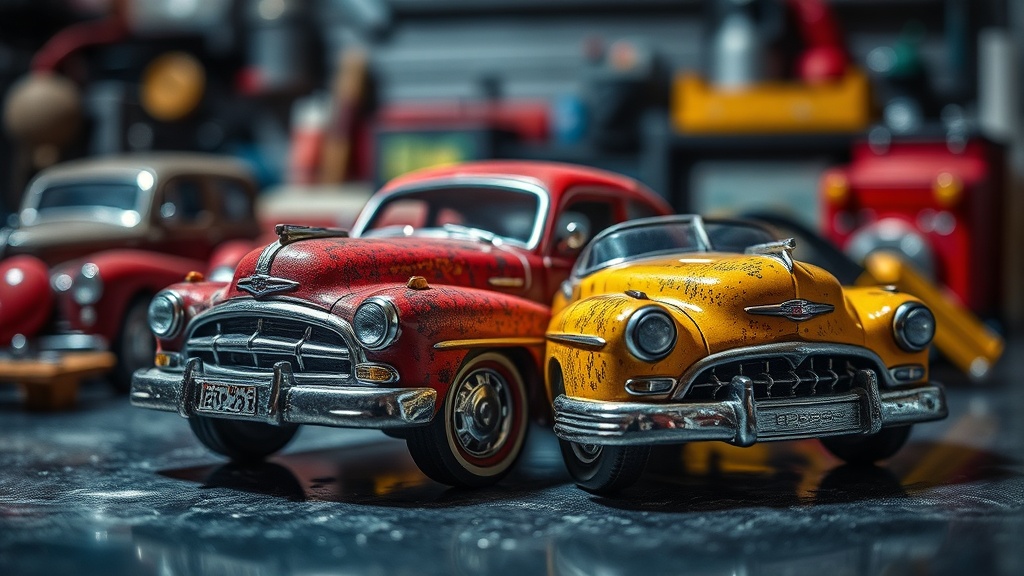
Preventing Oxidation and Corrosion in Diecast Collections

Why does metal oxidation happen in diecast collections?
An estimated 15% of diecast metal alloys contain trace amounts of zinc, which can undergo a chemical reaction known as zinc rot or oxidation when exposed to certain environmental factors. This isn't just a cosmetic issue; it's a structural failure that can turn a heavy, solid car into a pile of brittle dust. While most collectors focus on the aesthetics of paint jobs or decal placement, the actual metal composition is what keeps the collection intact over decades. Understanding how oxidation works helps you protect your investment—whether you're a casual hobbyist or a high-end collector.
Oxidation usually starts when the protective coating or paint on the metal surface is compromised. Once the air hits the raw alloy, a slow-motion chemical reaction begins. This process is often accelerated by moisture in the air (humidity) or contact with acidic substances. If you've ever seen a small white powder or a greenish crust forming around the axles of a vintage model, you're witnessing the early stages of metal decay. It's a frustrating sight for any collector, but it's often preventable with the right environmental controls.
What are the primary triggers for metal decay?
There are several factors that speed up the degradation of diecast alloys. Humidity is the big one. High moisture levels in the air act as a catalyst for oxidation. If you live in a humid climate or keep your collection in a basement, you're at a higher risk. Another factor is the presence of chemicals—even the oils from your fingerprints can be enough to start a reaction over time. This is why many collectors prefer to handle pieces by the edges or use way-less-than-perfect gloves when inspecting a new find.
Temperature fluctuations also play a role. Rapid changes between hot and cold can cause the metal to expand and contract, creating microscopic cracks in the paint or the metal itself. These tiny fissures provide an entry point for moisture and oxygen. It's not just about the temperature itself, but the stability of the environment where the models live. A stable room temperature is far better than one that swings wildly between day and night.
How can I stop metal rot in my vintage models?
Prevention is much easier than restoration. The first step is controlling the environment. Using a dehumidifier in your display room can significantly lower the moisture levels in the air. Most professional collectors aim for a consistent humidity level of around 40-50%. If you use display cases, ensure they are sealed well enough to maintain a stable microclimate. You can even use silica gel packets inside certain display units to soak up excess moisture—just remember to replace them periodically.
Another way to protect your pieces is to minimize physical contact with the raw metal. If you're a frequent handler, consider using lint-free microfibre gloves. This keeps the natural oils and acids from your skin away from the diecast body. If you notice a model starting to show signs of oxidation, don't panic. Sometimes, a very light application of a specialized protective coating or even a high-quality carnauba wax can seal the surface, though you should research specific methods for the type of metal you have before applying anything.
It's also worth looking into the chemical composition of your collection. Some lower-quality vintage pieces might have higher levels of impurities in the zinc alloy, making them more susceptible to decay. This is why many enthusiasts keep a close eye on the "zinc rot" phenomenon. If you want to learn more about the chemical properties of metals and how they react with the atmosphere, the Britannica science database offers great foundational information on oxidation reactions.
When it comes to long-term storage, avoid storing your collection in plastic bins that might trap moisture. Instead, use breathable-yet-protected display cases. If you're storing pieces in their original packaging, be aware that the cardboard and even some older plastics can trap moisture or release gases that might accelerate the aging process. For more technical data on metal preservation, checking resources from the Library of Congress regarding historical preservation techniques can be quite illuminating.
- Maintain a consistent temperature in your display area.
- Keep humidity levels below 50% whenever possible.
- Avoid touching the metal directly with bare hands.
- Use silica gel packets in enclosed display cases.
- Monitor for white or green powdery residue on axles.
A well-maintained collection is a testament to a collector's dedication. Whether you're looking at a single rare find or a massive shelf of hundreds of cars, the goal is the same: longevity. By managing the air and your handling habits, you ensure that your pieces remain as striking as the day you acquired them. It's a slow process, but the effort pays off in the long run when you look back at a collection that has stood the test of time.