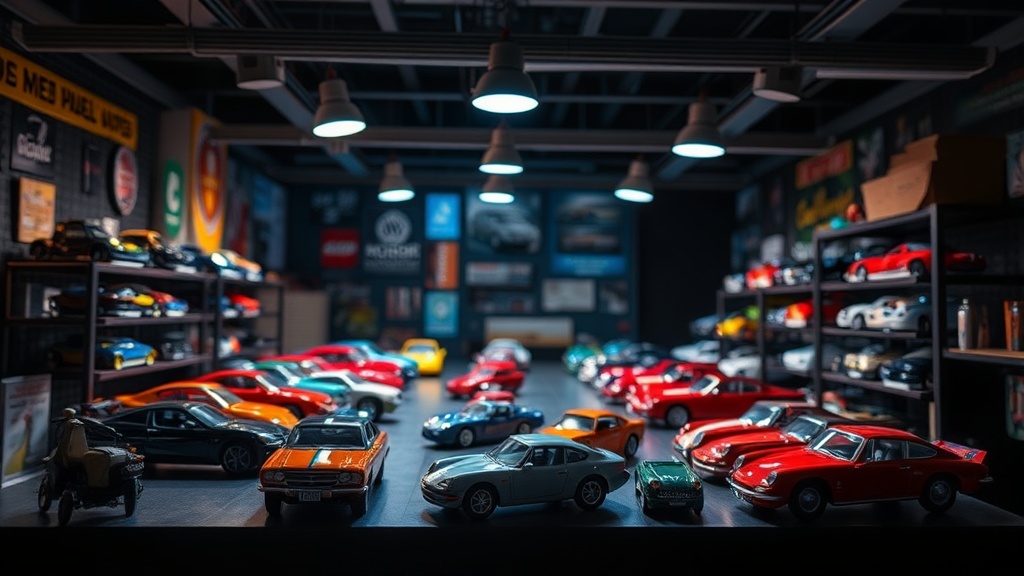
Selecting the Best Lighting for Diecast Displays

Imagine walking into a high-end collector's room, expecting to see a shimmering collection of diecast cars, only to find them shrouded in shadows or, worse, washed out by a harsh, singular bulb. You've spent years hunting down specific colorways and rare castings—perhaps a vintage Matchbox Chevy or a modern limited edition—yet the way you light them actually does a disservice to the paintwork and fine details. Lighting isn't just about visibility; it's about highlighting the metallic flake in the paint and the sharp lines of the chassis. This guide covers how to choose the right light sources and placement strategies to ensure your collection looks its best without causing long-term damage.
Most collectors make the mistake of using standard overhead room lighting or cheap, unshielded LEDs. While these might seem fine at first, they often create glare on acrylic cases or, in the case of certain bulbs, emit heat that can actually damage the plastic packaging or even the paint on certain vintage models. You want light that feels intentional, not accidental.
What Type of Light Should I Use for My Diecast Collection?
When you're looking at various options, you'll notice that LED strips, spotlights, and even basic desk lamps are common. However, not all light is created equal. For a serious collection, you really want to focus on color temperature and light output. LED is generally the way to go because it stays cool. Heat is the enemy of any diecast collection, especially if you keep your cars in their original blister packs. High heat can cause the plastic to yellow or even warp, and it can even lead to paint oxidation over several years.
Consider the following options for your display setups:
- LED Strip Lighting: Great for shelving units or inside custom cabinets. They provide a soft, even glow that fills a space without creating harsh shadows.
- LED Spotlights: These are perfect if you want to draw attention to a specific "hero car" or a single highly valuable model. They create a dramatic effect but can create high contrast.
- Fiber Optic Lighting: This is a niche option used by professional museum displays, but it's a great way to add tiny, pinpoint light sources to a large, multi-level shelf.
When researching light quality, it's helpful to understand the Kelvin scale. A lower Kelvin number (around 2700K to 3000K) offers a warm, yellowish light that feels cozy. A higher number (5000K and above) is a cooler, bluer light that mimics daylight. For diecast cars, a neutral light around 4000K often works best because it doesn't distort the actual color of the paint. If you want to see the true red of a vintage Ferrari, you don't want a warm bulb making it look orange.
How Do I Prevent Light Damage to My Collection?
Light damage isn't just about the physical structure of the car; it's about the chemical stability of the materials. UV rays are particularly aggressive. If you have a display case sitting near a window, the sunlight can act as a slow-motion wrecking ball. Constant UV exposure can cause the plastic in blister packs to become brittle and eventually crack. It can also fade the decals on your figures or the paint on your diecast cars.
To protect your items, you should look for lights that are UV-filtered. Most modern LEDs are naturally low in UV, but it's worth checking the specifications. If your display is in a room with a lot of natural light, you might want to use UV-protective films on your windows. You can find more information on how light affects various materials through resources like the Library of Congress preservation guides, which explain how light exposure impacts various physical objects.
Another tip is to avoid "hot spots." A hot spot is a bright, concentrated area of light that hits a single part of your car. This can create a distracting glare on the windshield or the hood. To avoid this, use diffusers. A simple piece of frosted acrylic or even a thin piece of white fabric can soften the light and spread it more evenly across your display. This ensures that every car in your shelf gets its moment in the spotlight without one car blinding the viewer.
Where Should I Place Lights in My Display Case?
Placement is often where collectors stumble. If you place a light source directly above a car, you'll likely get a heavy shadow underneath the chassis, making the car look like it's floating in a dark hole. If you place it too far to the side, one half of the car will be bright and the other will be pitch black.
A better approach is to use multiple, low-intensity sources rather than one high-intensity source. If you have a multi-tiered shelf, try placing LED strips along the front edge of each shelf, angled slightly toward the back. This creates a layered effect that brings depth to the collection. If you're using a single-case display, consider placing lights at the corners or along the sides to ensure the light travels through the items rather than just bouncing off the front glass.
| Light Type | Best For | Pros | Cons |
|---|---|---|---|
| LED Strips | Long Shelves | Even light, low heat | Can look "flat" without angles |
| Spotlights | Individual Models | High drama, focused | Creates heavy shadows |
| Ambient LED | Large Rooms | General visibility | No detail focus |
For those who are really into the technical side, you might want to look at specialized lighting for photography or museum-grade displays. Sites like specialty collector sites often have hints on how to present high-value items. Remember, the goal is to complement the diecast, not overpower it. You want the viewer to notice the tiny chrome bumpers and the intricate wheel designs, not the light bulb itself.
One thing to keep in mind: always turn off your display lights when you aren't looking at your collection. Even though LEDs are much cooler than incandescent bulbs, any amount of light exposure over years adds up. Keeping your lights on 24/7 is a habit that can lead to unwanted color shifts in your more sensitive pieces. If you have a collection that includes more than just diecast, such as vintage action figures with fabric elements, the risk of fading is even higher. Treat your display like a gallery, not just a storage unit. A well-lit collection tells a story, while a poorly lit one just looks like a cluttered shelf.