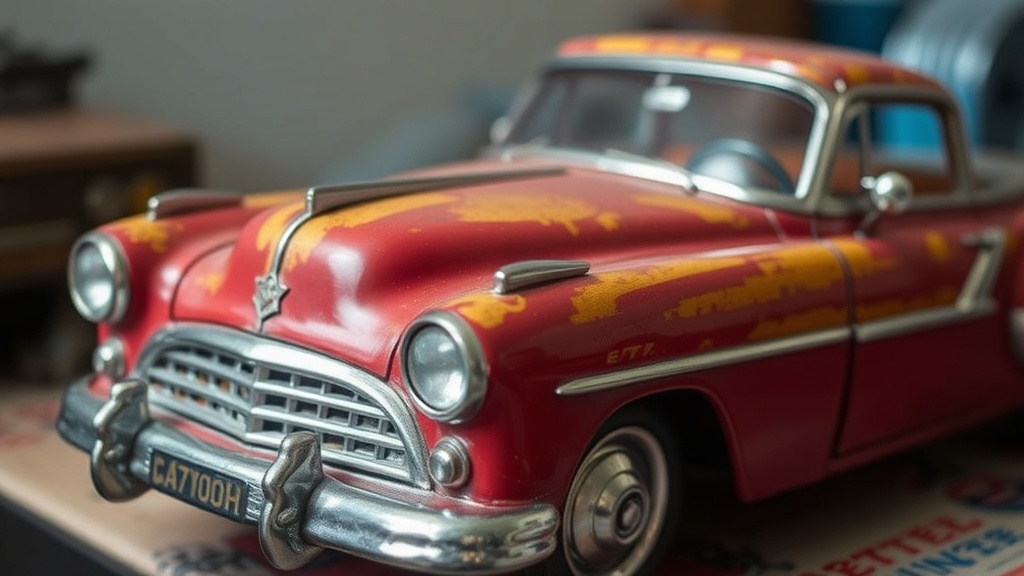
Why Does Diecast Metal Discolor Over Time?

Imagine pulling a vintage diecast model out of a storage bin, only to find that the once-vibrant metallic sheen has turned a dull, brownish hue or even developed a crusty white residue. This isn't just a bit of dirt; it's a chemical reaction that can permanently alter the value and look of a piece. Understanding the chemistry behind metal degradation is the difference between a collection that stays pristine and one that slowly decays in the shadows. This post breaks down the culprits behind metal discoloration and how you can spot the early signs before the damage becomes permanent.
The phenomenon most collectors deal with is oxidation. While we often talk about "rust" in the context of iron and steel, diecast models—frequently made from zinc-based alloys like Zamak—react to their environment in much more complex ways. When the metal is exposed to moisture, oxygen, or even certain types of gases in the air, a chemical reaction occurs. This isn't just an aesthetic issue; it's a structural one. If left unchecked, the metal can actually expand, leading to what collectors call "zinc rot" or "diecast sickness."
Is it Rust or Zinc Rot?
People often use the terms interchangeably, but they are distinct. Rust is the oxidation of iron-based metals. While many diecast cars have steel axles or screws that will rust, the main body of a diecast car is usually a zinc alloy. When this alloy fails, it's often called zinc rot. It starts as small, microscopic cracks or a slight change in color, but it quickly turns into a visible structural failure. If you see a car that looks like it's literally "bloating" or if the metal feels brittle and crumbly, you're likely looking at advanced zinc rot.
This happens when the purity of the alloy is compromised or when the metal is exposed to high levels of humidity. If you're storing your collection in a basement or an attic in a humid climate like Chicago, you're already at a higher risk. The moisture in the air acts as a catalyst, speeding up the reaction between the metal and the oxygen. You might notice the car looks slightly "puffy" or the paint begins to flake off because the metal underneath is expanding. It's a nightmare for any serious collector.
How Does Humidity Affect My Diecast Collection?
Humidity is the single biggest enemy of a non-climate-controlled collection. High moisture levels in the air don't just affect the metal; they can also affect the paint and the plastic components. When moisture enters the microscopic pores of the metal or the gaps in the paint, it triggers the oxidation process. This is why many collectors swear by airtight containers, but even then, if you seal moisture inside the container, you're just trapping a ticking time bomb.
To prevent this, you need to manage the micro-environment around your cars. Using desiccant packs—those little silica gel packets found in shoe boxes—can help, but they aren't a permanent fix if the room itself is humid. A more reliable method is maintaining a consistent indoor temperature and humidity level. According to the National Weather Service, fluctuations in humidity can be just as damaging as constant high humidity because the expansion and contraction of materials put stress on the paint and the metal. If your room's humidity swings wildly between day and night, your diecast models are feeling that stress.
Can I Fix Discolored Diecast Metal?
The short answer? It's incredibly difficult, and often, the damage is irreversible. If the discoloration is purely on the surface—like a bit of tarnish on a chrome bumper—you might be able to clean it with a very mild, non-abrasive solution. However, if the metal itself is oxidizing, you aren't just cleaning it; you're fighting a chemical change. Attempting to "buff out" a spot on a diecast car can actually strip the paint or even the thin layer of plating, making the problem worse.
If you find a piece that is showing signs of surface oxidation, the best move is to isolate it. Don't let it sit next to your most prized pieces. If the oxidation is just starting, you might be able to stabilize it by placing it in a controlled environment with a desiccant. For information on the chemical properties of metals, the Britannica science archives provide a deep look into how oxidation affects various elements. For collectors, the goal is always prevention. Once the metal structure has begun to break down, the piece is effectively a lost cause in terms of high-end collecting value.
Common Indicators of Metal Decay
- Flaking Paint: Often a sign that the metal underneath is expanding due to oxidation.
- White Residue: A sign of zinc oxide forming on the surface of the alloy.
- Brittle Components: If the axles or small parts feel "crunchy" or break easily, the metal is compromised.
- Surface Pitting: Tiny holes or unevenness in the texture of the metal surface.
Keeping a watchful eye on your collection is a full-time job, but it's one that pays off. If you catch a small spot of discoloration early, you might be able to save the piece. If you wait, you're just watching it disappear. Always check your cars every few months for any changes in texture or color. It's better to find a problem now than to realize your favorite model has turned into a pile of metal dust a year from now.