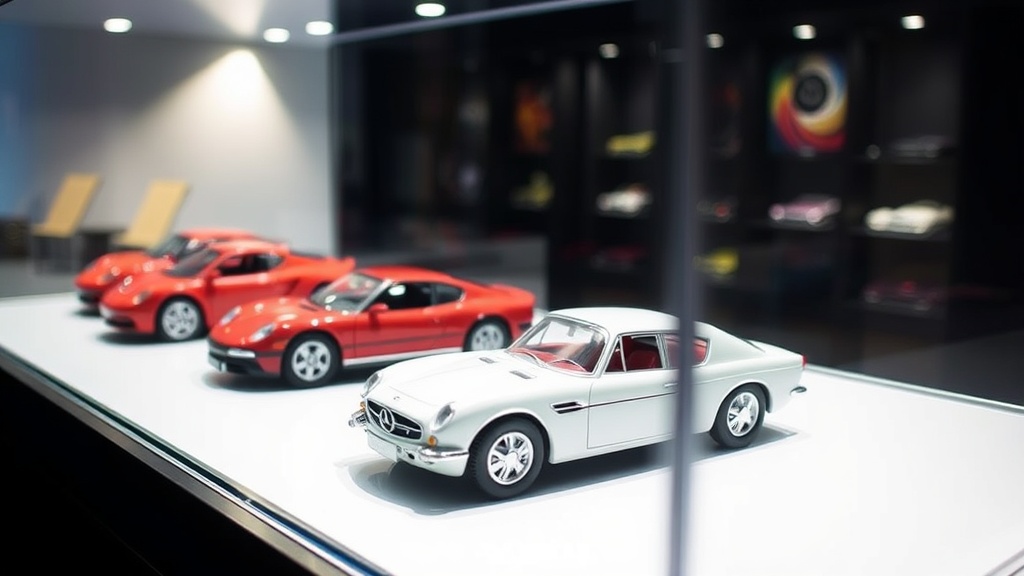
Why High-End Display Cases Aren't Always the Best Choice for Your Diecast

The Myth of the Airtight Display Case
Many collectors believe that a high-end, airtight acrylic case is the only way to protect their diecast models from the elements. They assume that if they can just find a box that's perfectly sealed, their collection will remain in pristine condition forever. This is a common misconception. In reality, sealing a collection inside a non-breathable container can often cause more harm than good—especially if moisture is trapped inside during the assembly process. A perfectly sealed environment can create a micro-climate that traps humidity, leading to unexpected oxidation or even paint degradation over time.
The goal isn't just to block out dust; it's to create an environment where the metal and plastic components can remain stable. If you're storing a vintage Matchbox collection or a high-end figure set, you need to understand the physics of what you're putting them in. A display should be a controlled space, not a vacuum. We're talking about managing air circulation and temperature fluctuations, which are often more dangerous than a little bit of ambient dust.
How Much Humidity is Too Much for Diecast Models?
Humidity is the silent enemy of the serious collector. While diecast metal is much tougher than paper or fabric, the various components—the zinc-alloy bodies, the plastic windows, and the rubberized tires—react differently to moisture. High humidity levels can lead to "zinc pest" (a form of corrosion that affects certain metal alloys) or simply cause the paint to bubble and peel if the moisture is trapped against the surface.
When looking for display solutions, consider these three factors:
- Airflow: Avoid cases that are completely airtight unless you've specifically treated the interior with desiccant packs.
- Temperature Stability: Avoid placing your display near windows or heaters. Sudden temperature shifts cause the materials to expand and contract, which can lead to paint cracks.
- Material Quality: High-grade acrylic is better than cheap polystyrene, as it's less likely to scratch or cloud over time.
If you want to check current industry standards for environmental stability, the American Chemical Society provides great data on how different materials react to environmental stressors. It's not just about the look; it's about the chemistry of your collection.
Can UV Rays Damage My Figures and Cars?
Light exposure is perhaps the most underestimated threat in the hobby. Most people focus on dust or moisture, but UV radiation is what actually bleaches the vibrant colors of a classic Matchbox car or a limited-edition figure. Sunlight isn't just bright; it's a constant stream of energy that breaks down chemical bonds in paint and plastic.
If your display is sitting in a room with a lot of natural light, you're essentially aging your collection in real-time. Even if the case is high-quality, standard acrylic or glass offers very little protection against the UV spectrum. You'll notice the colors looking faded or the plastic parts becoming brittle if the light isn't managed. This is why professional curators often use UV-filtering glass or specialized museum-grade acrylic. It's an investment in the longevity of the piece, not just a way to show it off.
Ways to Protect Your Collection from Light Damage
- Use UV-Filtering Acrylic: Look for cases specifically labeled as UV-resistant.
- Controlled Lighting: If using LED lights in a display, ensure they are "cool" LEDs that don't emit heat or high UV levels.
- Window Treatments: Keep the display away from direct sunlight paths.
A great resource for understanding the impact of light on materials is the Library of Congress, which offers extensive information on the preservation of physical artifacts and the science of light-induced decay.
What Should I Look for in a Display Cabinet?
When you're shopping for a new cabinet, don't just look at the aesthetic. A cabinet might look beautiful in a showroom, but it might be a nightmare for your collection's health. You want a balance of visibility and protection. A cabinet with a heavy frame might look sturdy, but if it's made of cheap materials that off-gas, the chemicals could actually damage your paint jobs.
Look for "acid-free" or "archival-grade" labels whenever possible. This is especially important if you're displaying figures alongside your cars, as the plastics in certain toys can react with the materials in the display itself. A high-quality display should be easy to clean, easy to access, and, most importantly, chemically neutral. It's better to have a slightly open system that allows for air movement than a closed box that traps heat and moisture.
Keep in mind that many collectors find that a simple, open-shelf system with a regular dusting schedule is actually safer than a sealed, low-quality plastic case. It's all about the trade-offs. If you choose a closed case, make sure you have a plan for managing the internal environment. Never assume that "sealed" means "safe."