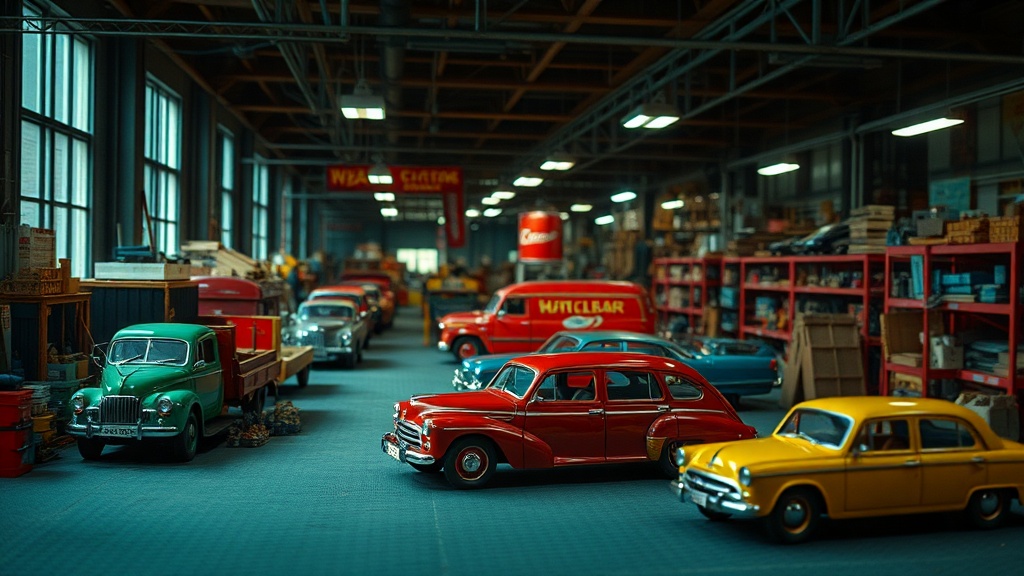
Forgotten Eras of Matchbox Production

The Golden Age of Metal and Scale
The Transition to Plastic and Playability
The Modern Era of Precision and Detail
Have you ever wondered why certain Matchbox cars from the 1970s look completely different from the models you see in stores today? This post explores the distinct production eras of Matchbox, specifically focusing on the transitions between Lesney'1s original manufacturing, the transition to Universal era styles, and the modern era. Understanding these shifts helps collectors identify the age, value, and manufacturing origin of their diecast collections.
What defines the Lesney Era of Matchbox?
The Lesney Era is defined by the period from the brand's inception through the early 1980s when the company was still an independent British manufacturer. During this time, the focus was on small-scale, highly detailed utility vehicles and realistic everyday cars. These models are often characterized by their heavy metal feel and a specific type of paint finish that differs from modern plastics.
Collectors often seek out Lesney-era models because they represent the "golden age" of the brand. These models weren't just toys; they were miniature versions of real-world machinery. You'll notice a lot of textures—think corrugated metal on trucks or heavy-duty rubber on tires. It's a tactile experience that modern, lighter-weight models struggle to replicate.
The transition out of this era was actually quite messy. As the company faced financial pressures in the late 1970s, the production quality began to shift. You might see a slight change in the "weight" of the diecast metal. It wasn't an intentional design choice, but rather a byproduct of changing economic realities in the UK manufacturing sector. It's a detail that many casual collectors miss, but seasoned eyes catch immediately.
If you're just starting out, you might find these older models a bit intimidating. I'd suggest checking out the ultimate beginner's guide to collecting Matchbox cars to build your foundation before diving into the deep end of Lesney-era hunting.
How did the Universal and Tyco eras change production?
The Universal and Tyco eras marked a shift toward more standardized, globalized production with a heavy emphasis on plastic-heavy components and brighter, more "toy-like" aesthetics. When ownership changed hands, the manufacturing process moved away from the strict British-centric production of the Lesney days. This resulted in a noticeable change in how the models were scaled and how the wheels were constructed.
During the 1980s and early 90s, the "look" of a Matchbox car became much more vibrant. The colors weren't just realistic; they were loud. This was the era of the "Superfast" evolution, where the cars were designed to compete directly with Hot Wheels' speed-focused marketing. The emphasis shifted from "scale model accuracy" to "play value and speed."
Here is a breakdown of the primary differences you'll see between the Lesney and Universal/Tyco eras:
| Feature | Lesney Era (Pre-1982) | Universal/Tyco Era (1980s-90s) |
|---|---|---|
| Primary Material | Heavy Diecast Metal | Increased Plastic/Lightweight Metal |
| Color Palette | Realistic, Muted Tones | Bright, Neon, and High-Saturation |
| Wheel Style | Standard Rubber/Metal Axles | Plastic "Superfast" Wheels |
| Focus | Realism and Utility | Speed and Playability |
It's worth noting that the transition wasn't always seamless. There was a period of identity crisis where the brand tried to be both a realistic diecast line and a high-speed racing line. This resulted in some "odd" models that don't quite fit into either category. These are often the "forgotten" pieces in a collection—models that collectors find confusing because they don't seem to have a clear design language.
Why do collectors value the "Superfast" era?
Collectors value the Superfast era because it represents a specific, high-energy moment in diecast history where the brand attempted to dominate the racing-toy market. While the Lesney era is loved for its realism, the Superfast era is loved for its technical-looking wheels and the sheer variety of colors. It's a different kind of nostalgia—one rooted in the excitement of the 80s rather than the craftsmanship of the 50s.
The "Superfast" wheels are a dead giveaway for this era. If you see a car with thin, low-friction axles and plastic-rimmed wheels, you're looking at a product designed for the track. These aren't meant to sit on a shelf; they're meant to be pushed across a linoleum floor. This era also saw an increase in licensed vehicles, bringing more "real" car brands into the Matchbox lineup to satisfy both kids and collectors.
One thing to watch for is the quality of the paint. In the Superfast era, you'll often see much glossier finishes. This can be great for display, but it also means that finding an "unplayed-with" specimen is much harder. Most of these cars were actually played with, unlike the high-end collectors' models we see today. (And yes, that means the paint chips are much more common on these!)
If you're looking to preserve these more delicate, plastic-heavy models, you'll want to look into keeping your diecast models pristine. The plastic components in these eras can become brittle over time if they aren't stored correctly.
What are the most common mistakes when identifying production years?
The most common mistake is assuming that a realistic-looking car is automatically from the Lesney era. While many Lesney models are indeed very realistic, the modern era has also produced highly detailed, high-end "collector" versions that can easily fool an untrained eye. You have to look at the underside of the chassis and the specific weight of the metal to be sure.
Here are three things you should always check to determine the era of a Matchbox car:
- Check the Base: Look for the manufacturer's name. If it says "Lesney," you're looking at the classic era. If it says "Universal" or just "Matchbox" without the Lesney branding, you've moved into the later production years.
- Examine the Wheels: Are they heavy, thick, or rubber-based? Or are they thin, plastic, and designed for speed? The wheel construction is one of the fastest ways to distinguish between a utility-focused model and a speed-focused model.
- Weight and Balance: Pick the car up. A Lesney-era truck will feel significantly heavier and more "substantial" in your palm than a 1990s-era plastic-heavy model.
The nuances of manufacturing can be tricky. For example, some models from the late 70s are "transitional" pieces. They might have the Lesney name but use slightly newer, cheaper components. This is where the real detective work begins. You'll often find yourself scrolling through Wikipedia or collector databases to cross-reference specific part numbers or chassis shapes.
Don't get discouraged if you misidentify a few. Even experts sometimes struggle with the transition years because the branding was in flux. The key is to look at the totality of the model—the paint, the wheels, the weight, and the base markings. It's a holistic process of elimination.
A lot of people think the "best" era is the one with the most expensive cars. That isn't true. The "best" era is simply the one that matches what you want to collect. If you love the grit of 1960s industrial vehicles, stick to Lesney. If you love the neon-soaked energy of the 1980s, focus on the Superfast era. Both have incredible value, but they serve very different parts of the collecting community.
One thing to keep in mind: the value of these "forgotten" eras often lies in the oddities. A model that was a "failure" in its own time—perhaps a car that didn't sell well because it was too niche—might be a rare gem today. Always look for the outliers in your collection. Those are the pieces that tell the real story of how Matchbox evolved from a small British company into a global icon.