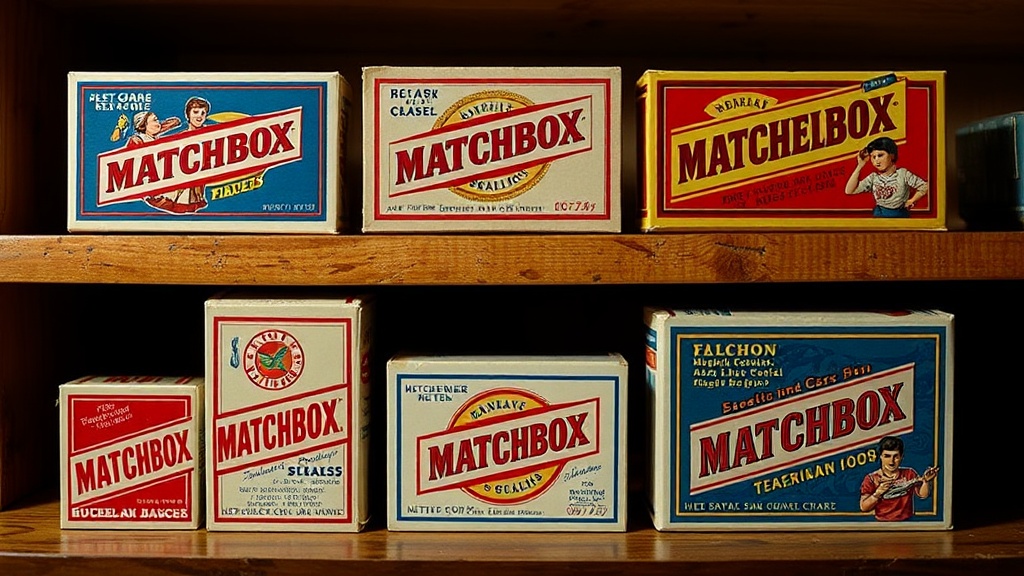
Tracing the Evolution of Matchbox Packaging Designs

A collector stares at a dusty shelf, realizing that the cardboard box sitting behind a 1968 Ford Bronco is actually worth more than the car itself. This isn't a fluke; it's a reality of the diecast market. This post tracks the visual evolution of Matchbox packaging, from the early cardboard boxes to the modern blister packs, and why these changes dictate much of the current secondary market value.
Understanding packaging history helps collectors identify authentic eras and spot potential counterfeits. We'll look at the shift from simple cardboard slips to the highly branded window boxes used by Mattel today.
Why Does Matchbox Packaging Matter to Collectors?
Packaging matters because it serves as both a historical record and a primary driver of a model's resale value. A "mint in box" car is often worth significantly more than a loose one, especially when the box is a rare, early-era design. For many, the box is the first piece of history a child interacts with—the bright colors and typography tell a story of the time it was produced.
The transition from unbranded boxes to highly stylized, branded packaging changed how these toys were marketed. It moved them from being simple "pocket money" toys to collectible-grade items. If you're just starting out, you might want to check out the ultimate beginner's guide to collecting Matchbox cars to understand how to grade these items properly.
It's also a way to verify authenticity. A certain era of car should always come in a certain type of box. If you see a 1950s-style car in a modern plastic blister, something is wrong.
The Evolution of Box Types
The design of the packaging has undergone several distinct phases. Each phase reflects the manufacturing standards and marketing trends of its decade.
- The Early Cardboard Era (1950s-1960s): Simple, often unbranded or minimally branded small cardboard boxes. These were functional and focused on protection.
- The Blister Pack Era (1hang-1980s): The introduction of clear plastic "bubbles" attached to a cardboard backing. This allowed the car to be seen while still being protected.
- The Window Box Era (1990s-Present): A hybrid approach using a cardboard box with a transparent window. This offers better protection and a more "premium" feel for collectors.
- The Collector Series Era: Specialized packaging for high-end or limited-edition releases, often featuring more intricate graphics and heavier cardstock.
How Has Matchbox Packaging Changed Over Time?
Matchbox packaging has evolved from basic, functional cardboard containers to highly branded, transparent window boxes designed for shelf appeal. This shift was driven by the need to show off the product while maintaining brand identity across global markets.
In the beginning, the goal was utility. The boxes were small, sturdy, and didn't take up much space. As the brand grew, the packaging became a marketing tool. The colors became brighter, the logos more prominent, and the graphics more dynamic. You'll notice that as the toy industry moved toward the "collector" market, the packaging became much more sophisticated.
The shift to blister packs was a massive turning point. It changed the way kids interacted with the product—they could see the car before buying it. This transparency became the industry standard. It also allowed for more colorful, character-driven art on the back of the cards. It's a small detail, but it changed the entire retail experience.
Here's a breakdown of the design shifts across different decades:
| Era | Primary Packaging Type | Key Design Feature | Collector Value Driver |
|---|---|---|---|
| 1950s-1960s | Small Cardboard Boxes | Minimalist, simple text | Box condition and rarity |
| 1970s-1980s | Early Blister Packs | Bold colors, bright graphics | Card/Bubble integrity |
| 1990s-2000s | Standard Blister Cards | Themed series branding | Series completion |
| Modern Era | Window Boxes / Premium Blister | High-fidelity photography/art | Unopened-seal authenticity |
The transition wasn't always smooth. There were many instances where packaging styles overlapped or changed mid-production. This can make identifying a specific year a real headache for newcomers.
The Role of Graphic Design in Value
Graphic design isn't just about looks; it's about the era. A 1970s card might have a completely different aesthetic than a 2020s card, even if the car inside is a similar model. This is because the packaging reflects the cultural zeitgeist. The fonts, the colors, and even the way the car is illustrated or photographed change with the times.
Collectors often look for "error" packaging. This might be a misprinted card or a box with a different colorway than the car inside. These are rare (and highly sought after). If you find a car that was supposed to be in a blue box but shows up in a red one, you might have found a winner. (Of course, most are just mistakes, but that's the thrill of the hunt.)
It's also worth noting that the material used for the packaging matters. Early cardboard was much more susceptible to "shelf wear." This is why finding a truly "mint" box from the 60s is so difficult. The paper stock was thinner, and the ink could fade easily under retail lights.
What Defines a High-Value Matchbox Box?
A high-value Matchbox box is defined by its condition, its rarity, and its ability to prove the car's authenticity. Collectors aren't just looking for a box; they're looking for a time capsule.
The most valuable boxes are usually the ones that have survived the elements. We're talking about edges that aren't crushed, colors that aren't faded, and a clear, uncracked plastic bubble. For those who collect more than just the cars, keeping these items safe is a full-time job. I've written about keeping your diecast models pristine, and the same rules apply to the packaging. Keep it out of direct sunlight. Keep it in a temperature-controlled environment. The cardboard is just as fragile as the metal inside.
The "unopened" status is the gold standard. Once that seal is broken, the value drops. It's a harsh reality of the hobby. A loose car might be a fun toy, but a sealed car is an investment piece. The packaging acts as a certificate of authenticity that is nearly impossible to replicate perfectly.
There are also specific "collector editions" where the packaging is the main event. These might include special tins or even wooden boxes for high-end-end-scale models. These aren't just containers; they are part of the art. They tell you that the item inside is something special.
One thing to watch out for is "re-sealed" items. Some unscrupulous sellers will take a used car and put it into a new, or even a vintage, box. This is why checking the weight and the feel of the cardboard is so important. A real vintage box has a specific weight and texture that modern-day reproductions often lack.
The history of Matchbox is written in these boxes. From the humble beginnings of small cardboard slips to the sophisticated, branded-heavy displays we see today, the packaging has always been a part of the car's identity. It's the first thing we see, and often, it's the most important part of the collection.