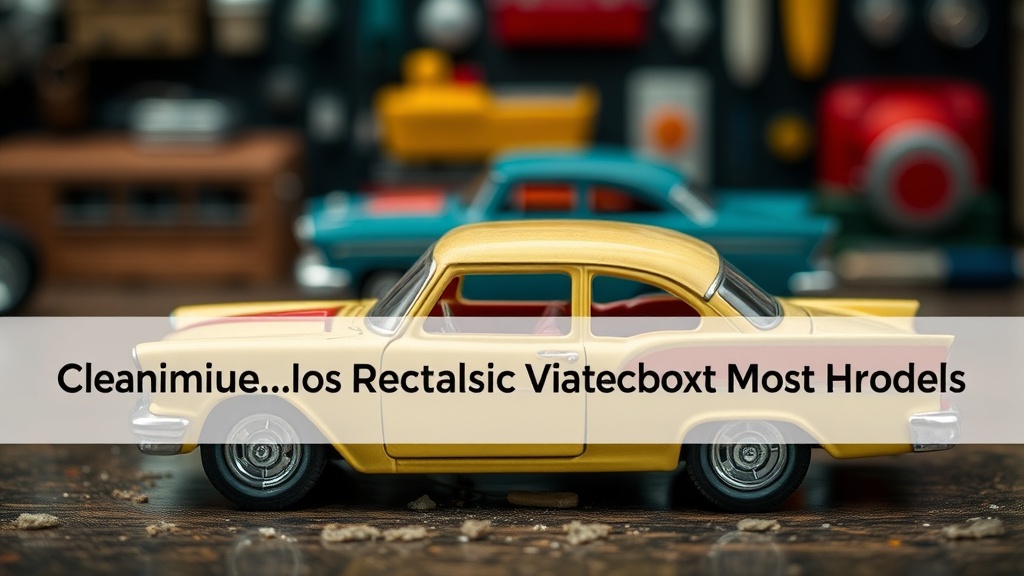
Cleaning and Restoring Vintage Matchbox Diecast Models

This guide provides technical instructions for cleaning, treating, and restoring vintage Matchbox diecast models without damaging the original paint or metal. You'll learn how to remove oxidation, address "zinc pest," and clean wheels and windows using safe, non-abrasive methods. We'll cover the specific tools and chemicals needed to revive a weathered collection while maintaining its historical value.
How Do I Clean Dirt and Grime from Vintage Diecast?
The safest way to clean vintage Matchbox cars is to use a soft-bristled toothbrush and a mild, pH-neutral soap solution. You should never use harsh chemicals or industrial degreasers on older models because the paint on vintage Lesney-era cars is often thin and fragile.
Start by inspecting the model for any loose parts. If the wheels are stuck or the axles are bent, a heavy-handed scrubbing session might cause more harm than good. A gentle approach is always better.
Fill a small bowl with lukewarm water and a few drops of a mild dish soap—nothing with heavy citrus or abrasive beads. Dip a soft toothbrush into the water and work in small, circular motions. Focus on the crevices around the doors and the wheel wells where dust tends to settle. It's a slow process, but patience pays off.
For the windows, avoid using any abrasive cloths. A damp microfiber cloth is your best friend here. If there's stubborn grime on the windows, a tiny bit of water is usually enough. If you're dealing with heavy residue, a Q-tip dipped in a very small amount of isopropyl alcohol might work, but be extremely careful not to touch the surrounding paint. Alcohol can strip the finish if you aren't careful.
Once the grime is gone, rinse the model with clean, distilled water. Distilled water is better than tap water because it won't leave mineral deposits or white spots as it dries. Pat it dry with a soft cloth—don't rub, or you might scratch the delicate decals or paint.
What Tools Do I Need for Diecast Restoration?
A standard restoration kit for vintage toy cars requires a set of precision tools, soft brushes, and non-abrasive cleaning agents. You don't need a professional workshop, but having the right specialized items prevents common mistakes that lower a model's value.
Here is a list of the most helpful items to keep in your kit:
- Soft-bristle toothbrushes: Essential for cleaning small crevices and wheels.
- Microfiber cloths: For drying and gentle wiping.
- Cotton swabs (Q-tips): Perfect for precision cleaning around windows and trim.
- Distilled water: Prevents mineral buildup.
- Natural bristle brushes: Good for dusting without scratching.
- Precision tweezers: Useful if you're working on much smaller components or loose parts.
If you're looking to go deeper into the mechanics, you might eventually need a small screwdriver set for disassembly, but I wouldn't recommend it unless you're an experienced hobbyist. Most collectors prefer to keep the cars intact to preserve the original factory state. If you're worried about how to display these after they're clean, you should check out my guide on keeping your diecast models pristine with proper display techniques.
How Do I Fix Oxidized or Rusty Wheels?
Oxidation on vintage diecast is usually addressed by using a fine polishing compound or, in some cases, a specialized metal cleaner. However, you must distinguish between surface oxidation and structural damage.
If your Matchbox has "zinc pest" or significant corrosion on the metal body, you're looking at a much more difficult problem. This is a chemical reaction in the diecast alloy that can cause the metal to swell or crumble. If the metal is actually crumbling, the car is likely a lost cause for a "collector-grade" restoration. But if it's just surface dullness, there's hope.
For the wheels, which are often made of different alloys or even plastic, you'll want to be even more cautious. If the wheels are metal and showing signs of oxidation, a tiny amount of metal polish on a Q-tip can bring back the shine. Just don't let the polish touch the paint. It's very easy to accidentally strip the paint off a car's body while trying to clean the wheels.
The following table compares common cleaning methods for different parts of the car:
| Part of Car | Recommended Method | Caution Level |
|---|---|---|
| Painted Body | Mild Soap & Water | High (Avoid Scratches) |
| Windows/Windshields | Damp Microfiber | Medium (Avoid Alcohol) |
| Metal Chassis | Dry Brush or Polishing Compound | Medium (Watch for Scratches) |
| Wheels/Axles | Soft Toothbrush | Low (Avoid Harsh Chemicals) |
A common mistake is using too much pressure. I've seen many people ruin a perfectly good vintage model by trying to "scrub" a stain away. If the stain doesn't come off with a gentle soak and a soft brush, leave it alone. The patina of age is part of the car's history.
Is It Worth Restoring a Damaged Matchbox Car?
The decision to restore a car depends entirely on whether the damage is cosmetic or structural and whether the car is a highly sought-after model. Most collectors value "original condition," even if it includes some wear. If you've heavily restored a car, it may actually lose value in the eyes of high-end collectors.
If you've found a rare colorway or a model from a forgotten era of Matchbox production, you should be extremely conservative with your cleaning. A "restored" car is often viewed differently than an "original" car. If you use paint or heavy polishes to hide flaws, you're essentially changing the item's identity. This can be a major issue if you ever decide to sell your collection.
Ask yourself these three questions before you start any deep restoration:
- Is the paint original or has it been repainted before?
- Is the damage a surface stain or a physical chip in the metal?
- Am I doing this for the enjoyment of the process or to increase the resale value?
If you're doing it for the joy of the hobby, go ahead and experiment! But if you're trying to "fix" a car to sell it, be aware that most serious collectors prefer a bit of "honest wear" over a car that looks like it's been through a heavy-duty chemical bath. It's a fine line to walk. One wrong move with an abrasive can turn a $100 model into a $10 model in seconds.
For more information on the history of these materials, you can check out the Wikipedia entry on die-cast toys to understand the metallurgical aspects of the era you're working on. Understanding what these toys are made of will help you avoid mistakes. For instance, knowing the difference between a zinc-based alloy and a plastic-based one will dictate how much moisture you can safely use.
If you're just starting out, don't feel pressured to jump into heavy restoration right away. Start with the simplest cleaning methods. A bit of warm water and a soft brush will solve 90% of the problems you'll encounter. The more you work with these models, the more you'll develop a "feel" for how much pressure is too much. It's a skill that only comes with time and, occasionally, a few mistakes.
Steps
- 1
Dusting with a Soft Brush
- 2
Using a Microfiber Cloth
- 3
Removing Surface Grime Safely
- 4
Addressing Oxidation and Rust